
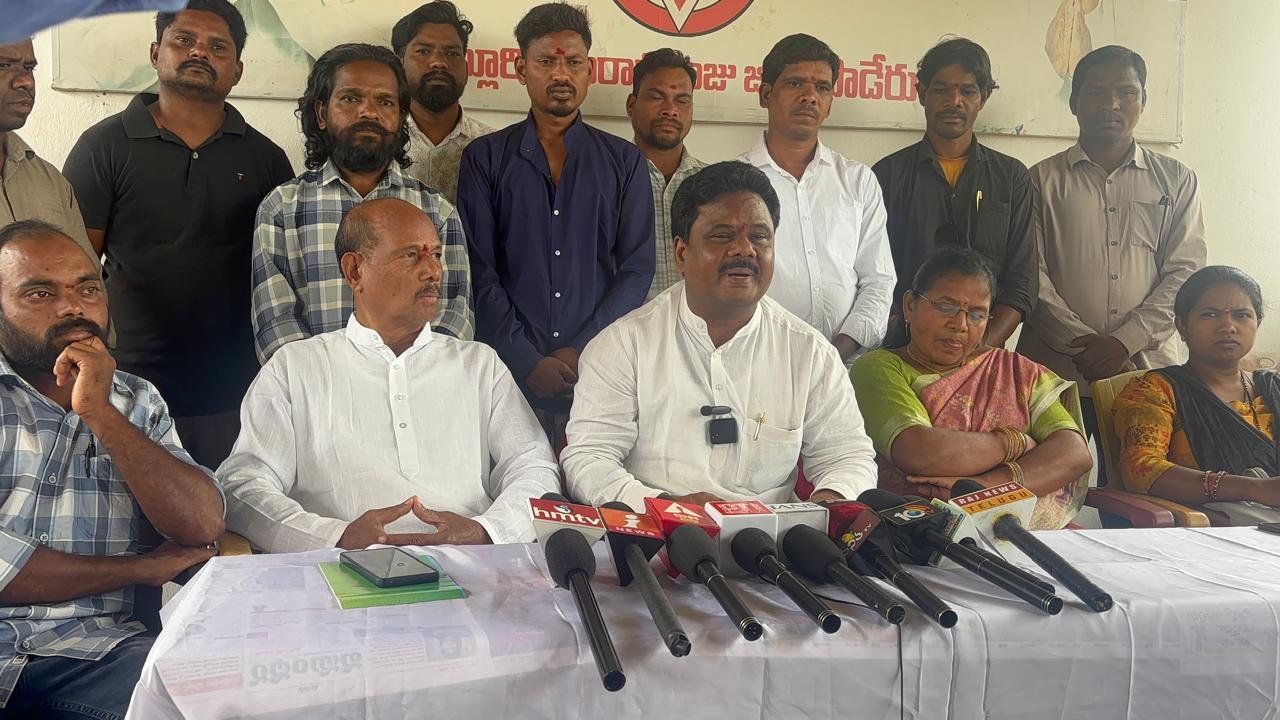
Paderu /Gudem kotha veedhi,Pen power July 15: Andhra Pradesh Folk Arts and Creativity Academy Chairman and Jana Sena Party Araku Parliamentary–Paderu Constituency In-charge Dr.Vampuru Gangulayya stated that the Andhra Pradesh Scheduled Areas Land Transfer Regulation, 1 of 1970 (popularly known as the 1/70 Regulation) is not merely an economic safeguard but the very foundation of the identity, culture, livelihood, and survival of tribal communities.Addressing a press conference at the Jana Sena Party office in Paderu on Wednesday, Dr. Gangulayya expressed concern over recent writ petitions filed in the Supreme Court by certain non-tribal individuals challenging the constitutional validity of the 1/70 Regulation. He alleged that such petitions reflect attempts to weaken legal protections and facilitate the transfer of tribal lands.He said that the Regulation has played a crucial role in protecting tribal lands in the Scheduled Areas and warned that any dilution of the law would adversely affect not only tribal communities but also marginal farmers and agricultural labourers. Allowing unrestricted sale and purchase of land in Scheduled Areas, he cautioned, could lead to large-scale concentration of land in the hands of commercial and influential interests. Dr.Gangulayya recalled that the Supreme Court has, on several occasions, upheld the constitutional validity of the Regulation. He referred to the P. Rami Reddy vs. State of Andhra Pradesh (1988) case, the landmark Samatha judgment (1997), and the Odisha Mining Corporation case (2013), stating that these rulings underscored the need to protect tribal land and rights.He emphasized that land is not merely a property for tribal communities but is deeply connected to their history, traditions, culture, social identity, and economic existence. He added that the objective of the Fifth Schedule of the Constitution is to safeguard the geographical, social, and cultural rights of Scheduled Tribes.
Dr.Gangulayya further observed that weakening tribal protection laws on the basis of demographic changes would undermine constitutional guarantees. He warned that any dilution of the 1/70 Regulation could also adversely affect the implementation of the Panchayats (Extension to Scheduled Areas) Act, 1996 (PESA), the Forest Rights Act, 2006, the powers of Gram Sabhas, and the broader framework of tribal self-governance.
Referring to international standards, he said that the United Nations Declaration on the Rights of Indigenous Peoples (2007) and the ILO Convention No. 169 also recognise and protect the land and natural resource rights of indigenous communities.
Describing the matter pending before the Supreme Court as one that goes beyond a mere land dispute, Dr. Gangulayya said it concerns the future of the constitutional protections provided under the Fifth Schedule. He asserted that the 1/70 Regulation remains a vital constitutional safeguard for tribal communities and appealed to the Union Ministry of Tribal Affairs and the Governments of Andhra Pradesh and Telangana to strongly defend its constitutional validity before the Supreme Court.